![Fire Pit Safety Tips: Smart Ways To Stay Safe & Enjoy More [Infographics]](https://bestfirepittables.com/wp-content/uploads/2017/04/Cone-Fire-Pits.jpg "Fire Pit Safety Tips: Smart Ways To Stay Safe &Amp; Enjoy More [Infographics] 1")
Fire Pit Safety Tips: Smart Ways To Stay Safe & Enjoy More [Infographics]
Fire Pit Safety Tips to protect your home, guests, and backyard. Learn easy, practical ways to enjoy your fire pit safely and responsibly.
Follow these simple fire pit safety tips to keep your gatherings safe and fun. From choosing the right spot to managing flames, learn how to prevent accidents while enjoying cozy outdoor moments.
🔥 Fire Pit Safety Tips: How To Stay Safe And Still Have Fun
Ever sat by a crackling fire pit and thought, “What could possibly go wrong?” Well, turns out, quite a bit — if you’re not careful! Backyard fire pits are awesome for cozy nights, roasting marshmallows, or chilling with friends. But without the right safety habits, that fun evening can turn risky fast.
Here’s the good news: staying safe doesn’t mean killing the vibe. By following a few smart, simple fire pit safety tips, you can enjoy that warm glow without worry. Let’s dive into everything you need to know before lighting up the flames tonight.
🔥 Understand The Importance Of Fire Pit Safety
Fire pits look harmless, but they can reach temperatures over 1000°F! That’s enough to ignite dry grass or melt nearby plastic chairs. The goal isn’t to scare you — it’s to remind you that fire safety is all about respect.
Whether it’s a wood-burning, propane, or gel fuel fire pit, each type has its own rules. Understanding your fire pit’s behavior helps prevent burns, flare-ups, or flying embers.
Think of it like this: your fire pit isn’t dangerous — it’s powerful. When handled smartly, it’s the heart of great outdoor memories.
🪵 Choose The Right Spot For Your Fire Pit
Where you place your fire pit matters more than you might think. A bad location can quickly turn a small fire into a big problem.
Here’s what to do:
- Keep your fire pit at least 10–20 feet away from your home, fences, or trees.
- Avoid low-hanging branches or wooden decks.
- Always set up on a flat, non-flammable surface like gravel or stone.
Pro tip: Check the wind direction before lighting. Strong gusts can carry embers where you don’t want them.
💨 Watch Out For Windy Days
Wind might seem harmless, but it’s a top reason for uncontrolled fire spread. Even a mild breeze can scatter sparks into dry grass or leaf piles.
If it’s windy enough to rustle tree branches, skip the fire that day. It’s not worth the risk.
And if you do light a fire on a calm day, use a spark screen — it keeps embers in and makes your setup look neat too.
🪑 Set Up Safe Seating Distance
We all love sitting close to the warmth, but don’t crowd the pit. Keep chairs, benches, and kids at least three feet away from the flames.
If you’ve got curious pets or little ones, consider adding a low safety barrier around the pit. It’s a simple way to prevent burns or accidents during lively gatherings.
🌲 Use The Right Firewood Or Fuel
Not all firewood is safe. Avoid burning:
- Painted or treated wood – releases toxic fumes.
- Softwoods like pine – they pop and send sparks flying.
- Trash or cardboard – unsafe and smoky.
Stick with seasoned hardwoods (oak, maple, or hickory). They burn hotter, cleaner, and last longer.
For gas fire pits, double-check hose connections and keep fuel tanks upright on solid ground.
🪣 Keep Water And Tools Nearby
No one plans for a fire to spread — but you can prepare for it. Always keep:
- A bucket of sand or garden hose within reach.
- A metal shovel to smother small flames.
- A fire extinguisher if you’re using propane or gel fuel.
A few seconds of quick action can make all the difference in an emergency.
Essential Fire Pit Safety Tools
| Safety Item | Purpose | Best Use |
| Fire Extinguisher | Stops growing flames fast | Propane/gas pits |
| Sand Bucket | Smothers fire without smoke | Wood pits |
| Metal Shovel | Moves coals safely | Cleanup |
| Hose With Nozzle | Quick control of sparks | Outdoor use |
🚫 Never Leave The Fire Unattended
Even a small flame can reignite embers when you’re not looking. If you’re stepping away — even for a minute — extinguish or cover the fire.
Leaving a fire pit burning overnight? Big no-no. Always make sure the ashes are cold to the touch before heading inside.
👨👩👧👦 Keep Kids And Pets Safe
Little ones are naturally drawn to fire — it’s bright, warm, and fascinating. But curiosity can lead to accidents fast.
Teach them early that a fire pit is “look but don’t touch.” Keep a safety zone marked with stones or chairs so they know where it’s safe to stand.
And remember: pets can’t tell when it’s hot! Keep leashes or barriers ready when animals are around.
🧯 Know How To Extinguish Your Fire Properly
Don’t just pour water and walk away. A half-burned pit can still smolder for hours.
Here’s a quick way to put out your fire safely:
- Spread the ashes with a stick or shovel.
- Pour water slowly until sizzling stops.
- Stir again — repeat until the ashes are cold.
- Cover the pit to prevent wind from reigniting embers.
🌙 Check Local Fire Regulations
Before lighting that match, check if your city or county has burn bans or fire pit ordinances. Rules vary by location — some areas restrict open fires during dry seasons.
Many local websites list real-time fire safety updates. Staying informed keeps your home (and your neighbors’) safe.
🌡️ Avoid Overloading The Fire Pit
Bigger fires aren’t better — they’re harder to control. Stack logs only up to the pit’s halfway point.
A moderate fire burns longer and steadier, creating the perfect amount of heat for comfort without flying sparks or smoke clouds.
🔦 Light Safely — Skip The Gasoline
Using gasoline or lighter fluid is a fast track to disaster. Those flammable liquids can explode or create flare-ups.
Instead, use:
- Fire starters or fatwood sticks
- Dry kindling like twigs or paper
- A long-stem lighter for safe ignition
Safe vs. Unsafe Fire Starters
| Safe Options | Unsafe Options |
| Fire starter cubes | Gasoline |
| Fatwood sticks | Lighter fluid |
| Dry kindling | Aerosol sprays |
| Long lighter | Alcohol |
🧤 Protect Yourself With The Right Gear
Handling hot tools or logs? Use heat-resistant gloves and long tongs. Even a small spark can burn skin quickly.
Keep sleeves rolled down and avoid synthetic clothing, which can melt if sparks land on it.
Safety doesn’t have to look boring — there are plenty of stylish, fire-resistant gloves designed for outdoor use.
🌧️ Be Prepared For Weather Changes
Weather can change in minutes. Sudden rain can cause smoke bursts, and dry heat increases spark spread.
Always check your weather app before starting a fire. If unexpected wind or rain hits, extinguish immediately.
🪵 Maintain And Clean Your Fire Pit Regularly
Ash buildup can block airflow and cause smoke or flare-ups. After each use, remove ash and debris once the pit is cool.
Inspect for cracks or rust that could weaken the structure — especially in metal fire pits. A well-maintained pit lasts longer and burns safer.
Fire Pit Maintenance Checklist
| Task | Frequency | Purpose |
| Remove ash & debris | After each use | Prevent buildup |
| Check cracks or rust | Monthly | Safety assurance |
| Clean fuel lines (gas pits) | Seasonally | Avoid leaks |
| Cover when not in use | Always | Protect from weather |
🌻 Respect Nature And Your Neighbors
Remember — smoke travels. Avoid burning wet wood that creates thick, smelly smoke. It’s not just annoying; it can trigger allergies or breathing issues nearby.
If your area is dry or windy, wait for safer conditions. Responsible fire pit use keeps your community safe and your evenings peaceful.
🌅 Enjoy Responsibly And End The Night Safely
Once the flames die down, don’t rush cleanup. Take time to ensure no hot embers remain. Dispose of ashes in a metal bin, never in plastic or paper bags.
End your night by double-checking the area — no smoke, no sparks, just a peaceful glow fading away.
✅ Conclusion
Fire pits turn ordinary nights into unforgettable memories — as long as you use them wisely. Safety doesn’t ruin the fun; it protects it. From choosing the right spot to cleaning up properly, every step keeps your backyard the cozy, safe haven it should be.
So go ahead — grab your marshmallows, spark that fire, and relax. You’ve got the know-how to keep everyone safe and smiling.
🔥 FAQs
- How far should a fire pit be from my house?
Keep your fire pit at least 10–20 feet away from your home, deck, or fence. This helps prevent heat damage and stray sparks. - What’s the safest way to put out a fire pit?
Slowly pour water over ashes, stir them, and pour again until cold. Always ensure the pit is completely out before leaving. - Can I use a fire pit on a wooden deck?
Only if you use a heat-resistant fire pit pad underneath. Otherwise, heat and sparks can damage or ignite wood. - What kind of wood burns safest?
Use seasoned hardwoods like oak or maple. Avoid softwoods or treated lumber to prevent smoke and toxic fumes. - How do I stop sparks from flying out?
Add a spark screen and avoid overloading the pit. Also, keep dry leaves or flammable materials far from the fire area.
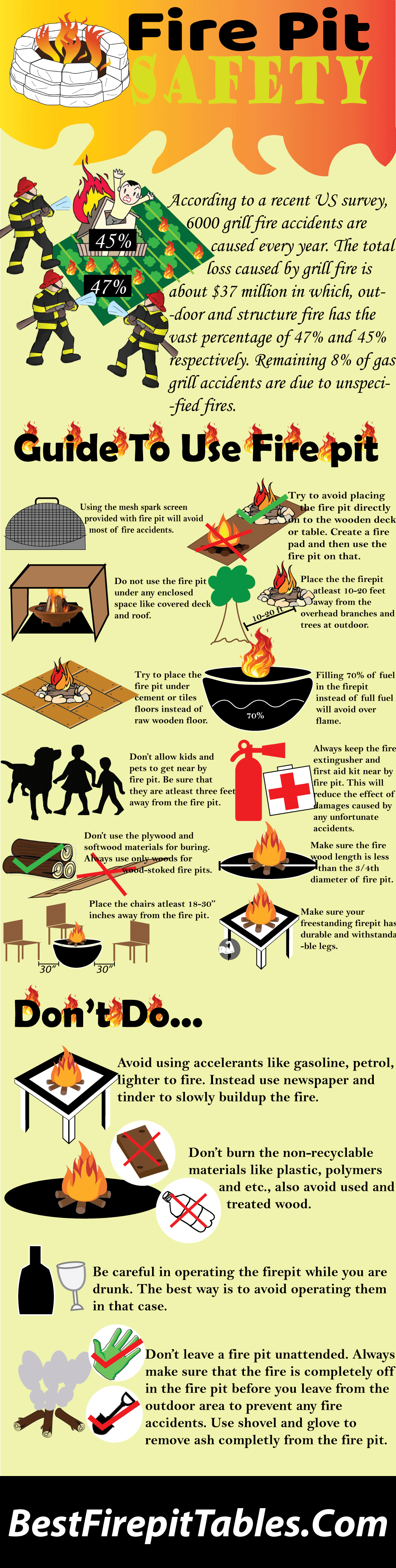
Fire Pit Safety Tips [Infographics]
Here is an Infographics that illustrates few tips on safeguarding your fire pits from unexpected fire accidents.